Email

info@innovationeyecentre.co.ke
info.ksm@innovationeyecentre.co.ke

Location

Kisii Town
Kisumu

Call us

Kisii: +254 727 807097
Kisumu: +254 700 860 923

Refractive Errors

Definition

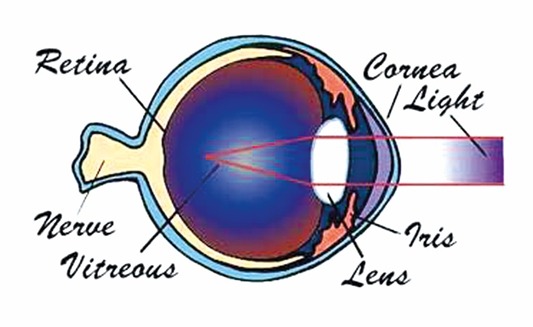
A refractive error occurs when the shape of eye prevents light from focusing directly on the retina leading to reduced or blurry vision.

Types

There are four types of refractive errors. They are:
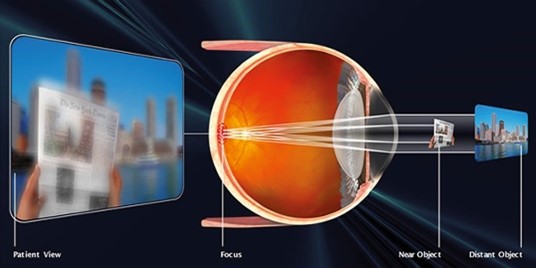
1. Myopia (nearsightedness) – this when one has clear vision on near objects but blurry/ poor vision on distant objects.
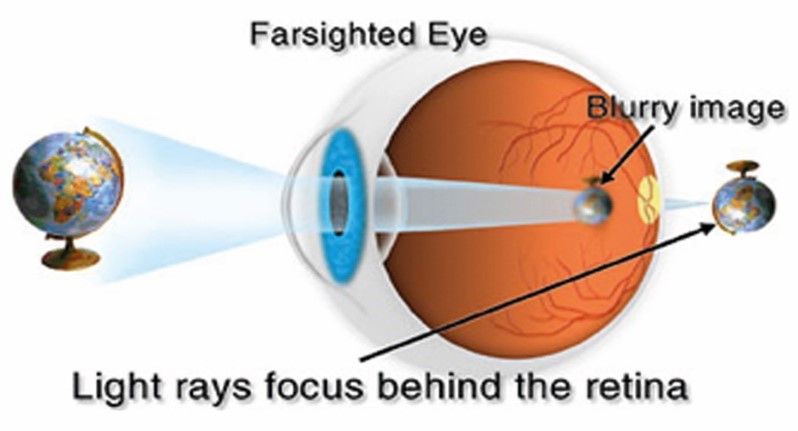
2. Hyperopia (long-sightedness) – this is when one sees distant objects clearly but blurry in near objects.
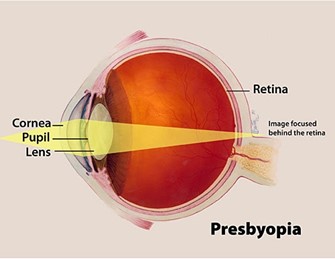
3. Presbyopia – loss of near vision with age. Normally begins at age of 40 years and it keeps on progressing with age.
4. Astigmatism – when one has focus problems as a result of irregular shape of the cornea.

Symptoms

  • Blurred vision.
  • Difficulty reading or seeing up close.
  • Squinting
  • Headaches
  • Eye strain.
  • Double vision.
  • Glare on bright lights.

Diagnosis

An eye care professional can diagnose refractive errors during a comprehensive eye examination. People with a refractive often visit eye Doctors with complaints of poor or blurry vision. However, some people don’t know they aren’t seeing as clearly as they could. It is advisable to have a regular eye check for detection.

Treatment

Prescribing spectacles or eyeglasses is the simplest and cheapest treatment. Others are contact lenses and refractive surgery.


What is a refractive surgery

Refractive surgery encompasses a range of modern surgical techniques aimed at correcting common vision challenges, including nearsightedness (myopia), farsightedness (hyperopia), astigmatism, and age-related reading difficulty (presbyopia). These procedures are performed to improve the eye’s focusing ability, allowing many individuals to lessen or completely do away with the need for spectacles or contact lenses, and enjoy clearer, more independent vision in everyday activities.

At Innovation Eye Centre, our refractive specialists carefully assess every patient’s individual vision requirements  including prescription levels, corneal measurements, overall eye health, and daily lifestyle demands. With advanced diagnostic equipment and cutting-edge surgical technology, we customize each procedure to ensure accuracy, safety, and results that stand the test of time.
Risk Factors

People with high degree of myopia have a higher risk of retinal detachment which may require surgical repair. Also have a high risk of getting glaucoma.

LASIK

What is LASIK?

LASIK is a laser-based eye procedure designed to correct refractive errors. During the surgery, a precise laser reshapes the cornea the eye’s front surface to help light focus properly on the retina. This adjustment often leads to clearer, sharper vision. For adults whose prescriptions have remained stable, LASIK offers an effective alternative to wearing glasses or contact lenses.

Why is LASIK Performed?

LASIK is an elective procedure for adults whose vision has remained stable. If your prescription has not changed for one to two years and you prefer to reduce or eliminate the need for glasses or contact lenses, LASIK may provide clearer vision. The surgery can correct:

  • Nearsightedness (myopia)
  • Farsightedness (hyperopia)
  • Astigmatism

Who Is a Good Candidate for LASIK?

You may qualify for LASIK if you:

  • Are 21 years or older
  • Have had a stable prescription for at least one year
  • Have healthy corneal and retinal structures